A number of CIOs and IT managers actively educate themselves and devote themselves to new areas that will allow them to change the view of IT from a reactive department to a strategic capability of their organizations and a full-fledged part of the company that can contribute to the successful development of the entire company. […]
Journal
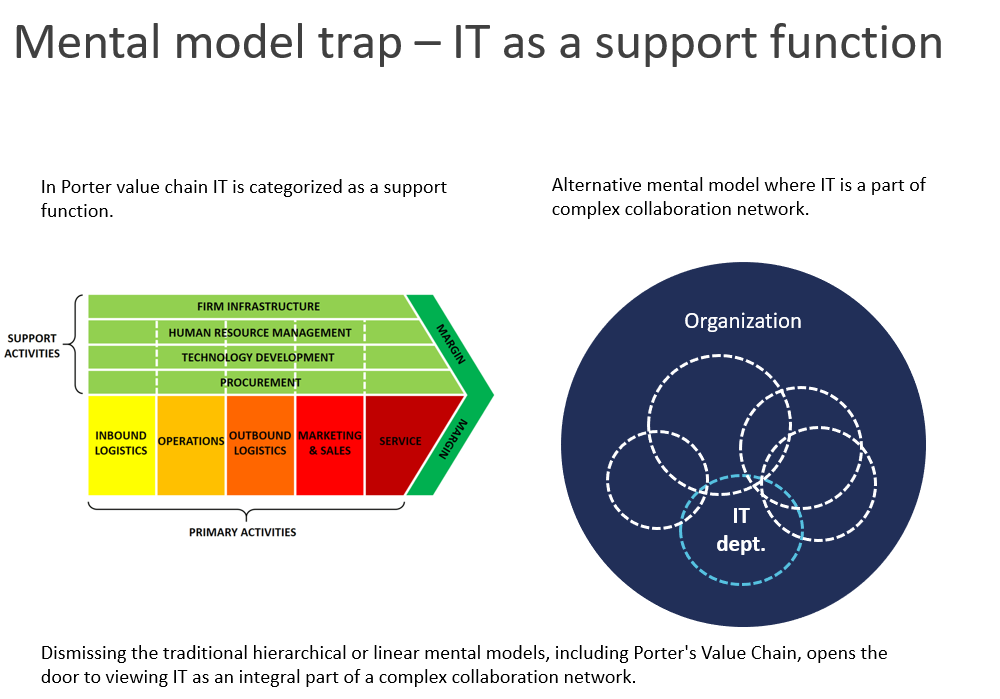
IT role paradigm shift
In 1985, Michael Porter introduced the concept of the value chain, which later became a widely used model for various value-based concepts. However, in that era, the IT landscape was vastly different from what it is today. Concepts like value from service delivery and consumption have now become the de-facto default models for value creation. […]
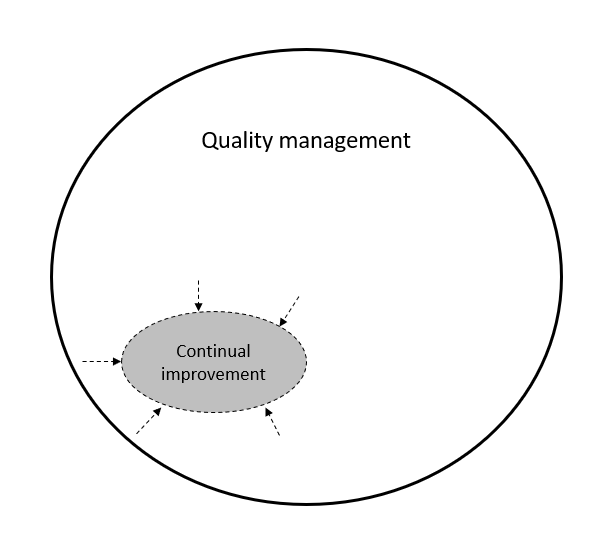
Continual Improvement Practice Limitations
The concept of continual improvement, influenced significantly by visionaries such as Sir Edward Deming in the 1950s, laid the groundwork for a structured approach to quality management, exemplified by the continual improvement (PDCA) cycle. Originally rooted in the context of factory-type work, where manual labor synchronized with machines, the focus was on optimizing workflows, eliminating […]
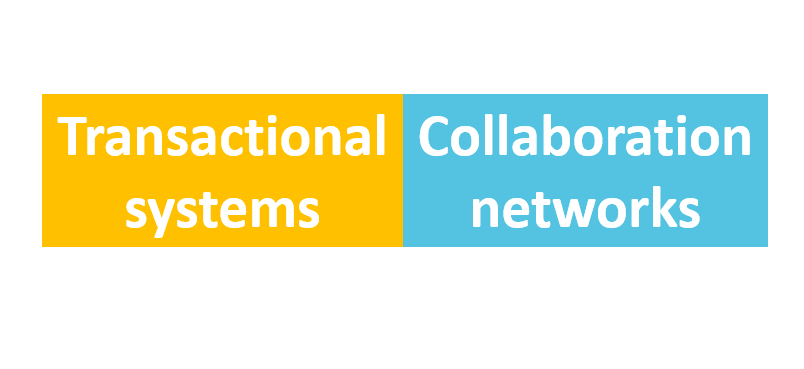
Do we really need SLAs?
Do We Really Need Service Level Management? Service management, as a particular approach, presupposes an economic exchange between two distinct parties: the customer ordering and consuming services, and the provider delivering services bound by specific quality criteria. The essential need to define service quality forms the basis for service level agreements (SLAs), usually encompassing aspects […]
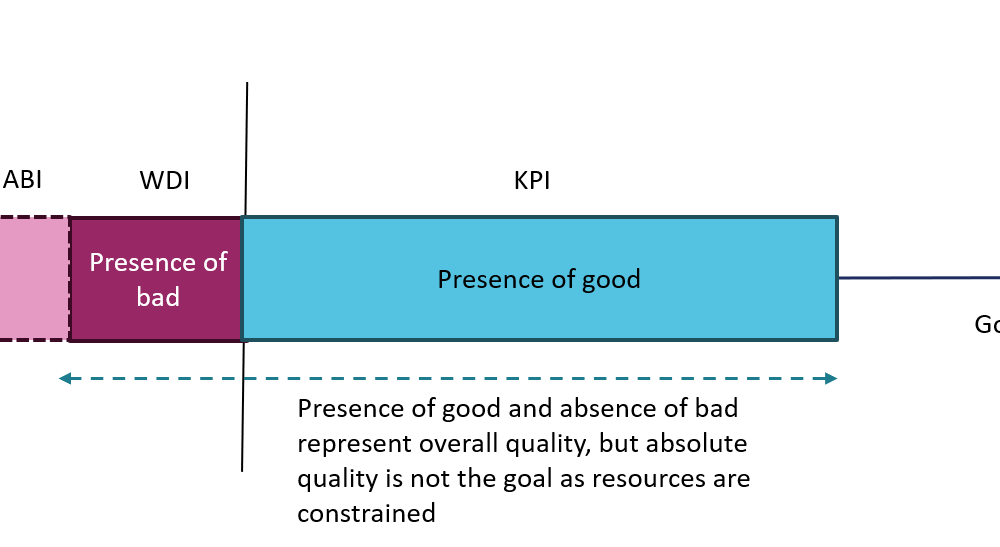
ABI metrics
IT Performance reporting The most used IT management methods, such as ITSM, ITIL, COBIT, process methods, offer a whole range of metrics, which are usually focused on reporting activities in the area of: processes (changes, incidents, requests,.) services (availability, response speed,.) user satisfaction (CX, CSAT, NPS..) These approaches are useful from the point of view […]